Posts

2005 Luigi Pira Barolo Vigna Rionda..

Image
2005 Luigi Pira Barolo Vigna Rionda. Still rather dark colour, but with a slight orange/ brick edge. Truffles, roses, black fruit and tar with a hint of minerals. Oak a bit to prominent, but nice! Per Kamperin
Image
The Brunkeberg Tunnel in Norrmalm, Stockholm, is a 231-metre-long passageway for pedestrians through the esker Brunkebergsåsen. The tunnel was inaugurated in 1886 by King Oscar II. Per Kamperin

2015 Nervi-Conterno, Gattinara, Piedmont

Image
2015 Nervi-Conterno, Gattinara, Piedmont. Cherry, smoke, spice, peach skin and tea leaf - an herbal bouquet reveals the beauty of the vintage. Terrific balance between acid and structure…  Per Kamperin

The Stockholm City Hall..

Image
The Stockholm City Hall is one of Sweden’s most famous buildings, and one of the capital's most visited tourist attractions. It is famous for its grand ceremonial halls and unique pieces of art and is the venue of the Nobel Prize banquet held on 10th of December each year. It also houses offices for 200 people including the Municipal Council. Per Kamperin on Tumblr....

Riddarholmen...

Image
Riddarholmen  ( Swedish: "The Knights' Islet") is a small  islet  in central  Stockholm ,  Sweden . The island forms part of  Gamla Stan , the old town, and houses a number of private palaces dating back to the 17th century. The main landmark is the church  Riddarholmskyrkan , used as Sweden's royal burial church from the 17th century to 1950, and where a number of earlier  Swedish monarchs  also lie buried. Per Kamperin on Flickr...

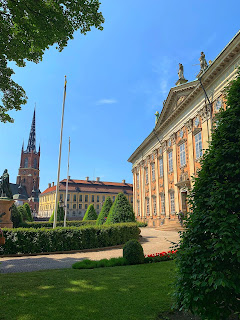
The House of Nobility..

Image
The House of Nobility (Swedish: ”Riddarhuset”) is a palace and an organisation for the nobles in Sweden and its objective is to preserve, maintain, and shield a historical heritage. (Stockholm, Sweden, June 2019) Per Kamperin on Tumblr...

Norr Mälarstrand..

Image
Norr Mälarstrand (Swedish for "Northern Shore of Mälaren") is a street on Kungsholmen in central Stockholm, Sweden. Note the sculptures and the crow-stepped gable type of design at the top of the buildings. A first proposal for a boulevard (or street) on the location in 1863–64, intended to embellish the area with a westbound entrance to the city similar to Strandvägen, the simultaneously proposed eastbound boulevard which, in contrast to the former, was actually built and became the grandiose front of the eastern district Östermalm. For Norr Mälarstrand, however, it would take another half-century before construction work on the Stockholm City Hall (1911–23) resulted in the urbanization of the area. Per Kamperin on 500px