Posts

Showing posts with the label nebbiolo

Barolo from Vigna Rionda - Vintage 2004

Image
 ”Protected from cold, eastern winds by the high ridge of Serralunga, Vigna Rionda gets full southern exposure. This combination allows grapes to reach ideal ripening before harvest almost every year. High vineyard altitudes of 985 feet provide marked day-night temperature changes that prolong the growing season and create complex aromas in the finished wines.”   Vigna Rionda - Vintage 2004

Barolo OtinFiorin Piè Rupestris.

Image
  The vineyards in Gabutti in Serralunga d’Alba are unanimously regarded as one of the most prestigious ‘crus’ of the Barolo-producing area.  They are located at the centre of a land with an extraordinary vocation for growing nebbiolo, a vine which produces wines with remarkable character and structure perfect for ageing.  This is the birthplace of Barolo OtinFiorin Piè Rupestris: it is 100% Serralunga in its character ‒ a paradigmatic wine thanks to its severe and authoritative tone, with an austere but also generous and sharing manner ‒ as well as in the organoleptic characteristics: liquorice, juniper, tar, balsamic notes, spices and undergrowth are just the most recognisable and typical expressions of an aromatic patrimony which sketches, year after year, a veritable narration of the land.  This is made authentic and trustworthy by our unequivocally natural choices and by an attitude alien to mediation. A narration which changes and evolves in time, under the sig...

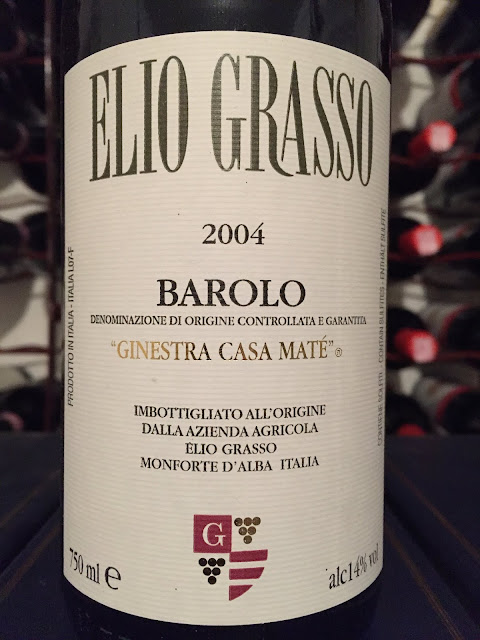
2004 Elio Grasso Barolo Ginestra Casa Maté

Image
2004 Elio Grasso Barolo Ginestra Casa Maté. Distinct tannins, cherries, violets, roses, ham/meat with some wood and a hint of tobacco. Grape:  Nebbiolo First vintage:  1978 Aspect and height above sea level:  south-facing, 300-350 metres Soil type:  moderately loose-packed, slightly clayey, limestone-based Vine training system and planting density:  Guyot-trained at 4,500 vines per hectare Average age of productive vines:  around 40 years Harvest period and method:  second 10 days of October, manual harvest The vinification procedure for Barolo Ginestra Casa Matè involves alcoholic fermentation in temperature-controlled stainless steel tanks, with daily pumping over. After completing malolactic fermentation, the wine matures in 25-hectolitre barrels of Slavonian oak. Bottling normally takes place in August. The Barolo Ginestra Casa Matè then stays in the binning cellar for 8-10 months before release. Front Label

Azelia Barolo Margheria - Vintage 2013

Image
Classic and typical, but still rather young IMO — cherries, roses, tobacco, a bit of leather and some tar with a hint of floral nuances. Rather long finish and a sense of minerality.  Wine in the glass.. Winemaker Notes; An impeccable balance. Aroma and finesse with power and body at the same time. Sweet nose, with hints of cherry, black currant and licorice. Fruity tannins. A union of characters. Front Labels WS Cherry and plum flavors are buried in a dense matrix of tannins, shaded by tobacco, leather, tar and iron notes. Linear and persistent on the finish, if less expressive at this stage than its peers. Best from 2021 through 2040. WA This vineyard is located in Serralunga d’Alba, where the soils are rich with clay and limestone. Vines are 50 years old, on average. The 2013 Barolo Margheria is a terrific wine with broad shoulders and a fully loaded, exuberant personality. The bouquet is dark and gristly in places with aromas of dark cherry ...

2006 Cappellano Barolo Piè Rupestris Otin Fiorin

Image
2006 Cappellano Barolo Piè Rupestris Otin Fiorin. Dried fruits, tar, liquorice, spice and tobacco with a hint of juniper and pine. Elegant and traditional with huge potential... Per Kamperin - Wine Blog

2006 Comm. G.B. Burlotto Barolo Monvigliero

Image
2006 Comm. G.B. Burlotto Barolo Monvigliero. Firm classic style, a fabulous effort from Burlotto. Still young, but a truly great wine! https://perskamperin.tumblr.com/post/188443436575/2006-comm-gb-burlotto-barolo-monvigliero-firm G.B. Burlotto in Verduno has a storied past. The estate was founded in the late 19th century by Commendatore Giovanni Battista Burlotto who made the wine himself until his death in 1927. The Commendatore’s wines were highly esteemed in the early 20th century and they rivaled French Bordeaux for space in well-stocked European cellars. After his death the estate lapsed and Burlotto wines lost prestige. Today, however, G.B. Burlotto wines are once again highly acclaimed thanks to the work of Fabio Alessandria, the founder’s great-great-grandson. The 37-acres of vineyards are planted to Nebbiolo, Barbera, Dolcetto, Cabernet Sauvignon and Freisa, a red grape native to Piedmont. The Monvigliero Vineyard produces some of Burlotto’s most sought-after B...

Two great Wines from Mamete Prevostini..

Image
Being a dedicated ‘Barolophile’, I have seen that demand and appreciation for Nebbiolo has skyrocketed the last ten years. As prices have risen for the best Barolos and Barbarescos (the most famous Nebbiolo wines) wine-lovers have looked out for alternatives, but Nebbiolo, unlike many other grapes, has never really prospered outside (northwestern) Italy. The Nebbiolo grape has long been associated with the Piedmont region, but alpine regions like Valtellina in Lombardy offer an interesting alternative. Valtellina Within the Valtellina zone, where Nebbiolo is known as ”Chiavennasca”, the wines are defined by two basic quality levels. The base is the Valtellina, which generally tends to be light-bodied and tannic. A distinct step up, with richer textures and more complex flavors, is the Valtellina Superiore. Valtellina also produces ”Sforzato”, a powerful Amarone-style wine made of 100% dried grapes for added body and concentration. Valtellina is also one of the most dramatic v...