Posts

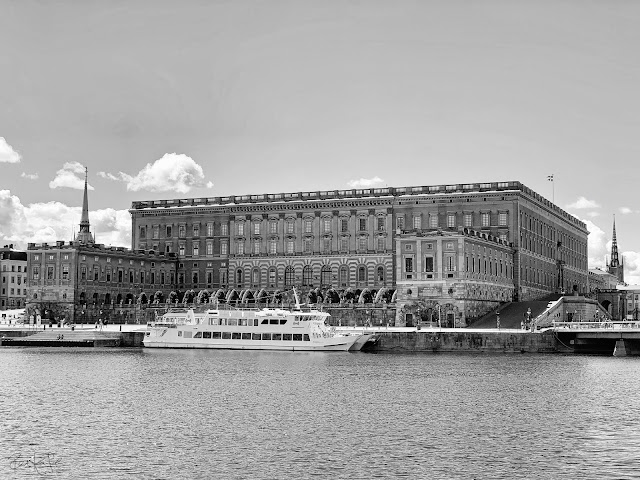
The Royal Palace of Stockholm
Image
The Royal Palace of Stockholm stands proudly on Slottsbacken in the Swedish capital’s charming Old Town. Designed by master architect Nicodemus Tessin the Younger – this enormous jewel of a regal building was inaugurated in 1754. Tessin learnt his craft in France, Italy and England, where he studied architecture and landscape gardening for many years. A former pupil of Lorenzo Bernini, he drew heavily on the Baroque architecture of Rome – which explains why he decided to model The Royal of Palace of Stockholm on a Roman palace. The Royal Palace

Architectural Symmetry

Image
The functionalist-style townhouses were designed by architect Paul Hedqvist and built by Olle Engkvist in 1929-1932. They later became known as Per-Albinhusen after Engkvist’s friend, prime minister Per-Albin Hansson, who moved into Ålstensgatan 40 soon after they were built. Today the popular townhouses are listed buildings due to their national architectural importance. International functionalist architecture developed during the aftermath of World War I and was inspired by a need to build a better world for the growing population through highly functional housing. Functionalist structures typically feature identical mass-produced elements, cubic shapes, clean-lines and the use of basic raw materials. The genre was a major influence on Funkis architecture which became popular in Sweden in the 1930’s. Ålsten - Bromma

Stockholm in Black & White

Image
The complimentary and opposing colours that bring a colour image to life are all reduced to black and white or shades of grey in a monochrome image and you have to look for tonal contrast to make a shot stand out.

Krug 1988

Image
At the House of Krug each Krug Vintage is crafted to be different, created to reveal the expression of a year’s specific character, captured uniquely as only the House of Krug can. There are as many stories as there are Krug Vintages. Upright structure and the solid acidity not found in particularly hot years, Krug 1988 reveals sharp purity. In the mouth, it is full of sensations: orange blossom, dry figs, ripe quince, and mild spices such as cinnamon and ginger. With a crystal finish and lingering palate, Krug 1988 is a treasure trove of emblematic savoir-faire from the House of Krug. Krug 1988 The first of the trilogy of Krug Vintages of 1988, 89 and 90 – a feat never again repeated at the House of Krug – 1988 is undoubtedly the subtle elder sister of 1989’s louder, younger exuberance. Krug 1988 stayed a bit close for quite some time, nearly austere at the beginning but today after more than 20 years in Krug’s cellars it is entering into a new, expressive phase, it is opening up beau...

2001 Massolino Barolo Riserva Vigna Rionda

Image
2001 Massolino Barolo Riserva Vigna Rionda - 🍷🍷🍷 - Stunning bottle , at mid of drinking window? (Pic from my cellar..) Barolo Vigna Rionda Riserva 2001

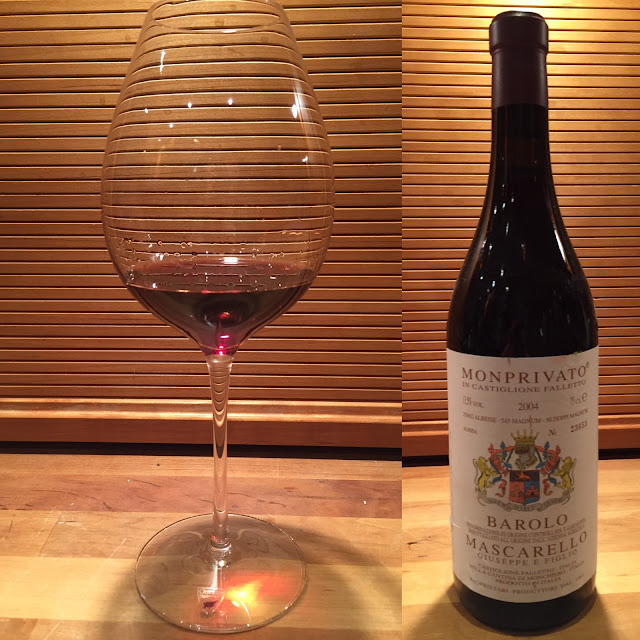
2004 Giuseppe E Figlio Mascarello Barolo Monprivato

Image
2004 Giuseppe E Figlio Mascarello Barolo Monprivato. Classic and typical with cherries, spice, soil, tar and leather. Concentrated with complex nuances. Great Barolo. Many years to go… Monprivato is one of the most distinctive Barolos around.  It boasts a level of elegance, clarity of expression and beautifully nuanced complexity that's heartbreaking. There's a unique and very compelling mingling of fruit, flower and earth with an incredible finesse.  The life of Monprivato is legendary.  It can age for decades. Over time, it shows its breeding to an even greater extent and gets even more beautifully aromatic and transparent. With time, a beguiling depth and perfume emerges.  2004 is a very strong vintage for Piedmont, but even in this context the Monprivato is brilliant.  Few wines reached this level of refinement and delineation. Monprivato - Vintage 2004

2007 Giuseppe Rinaldi Barolo Brunate - Le Coste

Image
2007 Giuseppe Rinaldi Barolo Brunate - Le Coste, a wine worth devoting yourself to… ”Powerful, complex and multi-faceted - red fruit, leather, cherries, blackberries, herbs, tar, orange peel, a hint of medicinal tones and a floral touch and perhaps also some meaty and animal features.. First labelled and sold as a single-vineyard wine in   1934, Brunate is one of the Grand Crus of the Langhe region, even if the classification has not yet been made. Why? Because of its ability to deliver high quality fruit year-in, year-out. It is at the base of the La Morra slope, in a plum south amphiteatro which generates plenty of steamy heat by day and because of its position low down, it chills down quickly by night, preserving the perfumes and extending the hang-time.